This post, from the blog diary of a disabled person, explains what happens when people use spaces designed for disabled people.
Tag: disabled
How the cost of living crisis is hurting disabled people

The cost of living crisis is affecting everyone in the UK, but especially disabled people. Disabled people face extra costs of £975 a month on average to reach the same living standards as non-disabled people. These costs include things like specialised equipment, adaptations, transport, care and support.
But now, disabled people are also facing soaring energy bills, rising food prices and inflation. This is putting them under immense financial pressure and forcing them to make impossible choices between essentials.
The energy crisis and disabled people
One of the main challenges for disabled people is the energy crisis. Many disabled people need to use more energy because of their impairment or condition. For example, they may need to keep their home at a certain temperature, use electric appliances like wheelchairs or hoists, or charge medical devices like ventilators or nebulisers.
According to Scope, a disability charity, over a third of disabled adults feel that their impairment or condition has an impact on how much energy they use. And 91% of them are worried about energy bills this winter.
But the government’s support for disabled people to cope with the energy crisis is not enough. The Warm Home Discount, which gives eligible households a £150 rebate on their electricity bill, does not cover the extra costs that disabled people face. And the Disability Cost of Living Payment, which gave some disabled people a one-off payment of £150, comes nowhere near the costs. Just as an example, I’m currently paying over £200 per month for gas and electricity.
Scope’s research shows that 80% of disabled people receiving the £150 cost of living payment said it would not be enough to cover their increased costs for essentials. And 57% of disabled people eligible for the £650 cost of living payment said it would not be enough either.
As a result, many disabled people are falling into debt or cutting back on other essentials to pay their energy bills. Scope’s figures show that almost a third of disabled people have been pushed into debt in the last year, compared to 16% of non-disabled people. And last month, the average energy debt of disabled households supported by Scope increased to £1,794.
The impact on disabled people’s health and wellbeing
The cost of living crisis is not only affecting disabled people’s finances, but also their health and wellbeing. Many disabled people are having to sacrifice their basic needs and dignity to cope with the rising costs.
- 38% of disabled people said they were not using heating when cold because of the cost of living, compared to 26% of non-disabled adults
- 34% of disabled people said they were buying lower quality food, skipping meals and/or eating less because of the cost of living, compared to 19% of non-disabled adults
- 20% of disabled people said they were cutting back or stopping showering and bathing because of the cost of living, compared to 9% of non-disabled adults
These choices can have serious consequences for disabled people’s physical and mental health. For example, not heating their home can increase the risk of infections, respiratory problems or hypothermia. Not eating enough or well can affect their immune system, energy levels or medication effectiveness. And not showering or bathing can lead to skin infections, pressure sores or loss of self-esteem.
What needs to change?
The cost of living crisis is making disabled people’s lives harder and more miserable. They deserve better support from the government and the energy sector to meet their needs and live with dignity.
Scope is calling on the government to:
- Introduce an Energy Social Tariff for disabled customers that need to use more energy. This would be a discounted rate that accounts for both energy usage and income. Scope suggests that this should apply to households receiving benefits like Disability Living Allowance (DLA), Personal Independence Payment (PIP) or Attendance Allowance, or households under the median income receiving Carer’s Allowance. Scope says that 86% of disabled people support this recommendation.
- Restore the value of disability benefits that have been eroded by inflation over the years. Scope estimates that benefits like Employment and Support Allowance (ESA) have lost up to £687 in value since 2015. This means that many disabled people are living below the poverty line and struggling to afford their extra costs.
- Increase the funding for local authorities to provide social care and support for disabled people. Scope says that social care is vital for many disabled people to live independently and access essential services. But due to chronic underfunding, many local authorities have tightened their eligibility criteria and reduced their provision. Scope says that 1.5 million older and disabled people are currently going without the care they need.
Scope is also urging the energy regulators and suppliers to:
- Extend the Warm Home Discount to more disabled customers who are struggling with their energy bills. Scope says that the current eligibility criteria are too narrow and exclude many disabled people who need the support.
- Provide clear and accessible information and advice to disabled customers on how to switch to cheaper tariffs, access grants or schemes, or improve their energy efficiency. Scope says that many disabled people are not aware of their options or find it difficult to access them due to communication barriers or digital exclusion.
- Offer flexible and fair payment plans to disabled customers who are in debt or arrears. Scope says that many disabled people are facing aggressive debt collection practices or threats of disconnection from their energy suppliers. Scope says that energy suppliers should take into account disabled people’s circumstances and income when setting up repayment arrangements.
How you can help
If you are a disabled person or know someone who is, you can get help from Scope’s Disability Energy Support service. This is a free and confidential service that can help you with your energy bills, debt, switching, grants and more. You can contact them by phone, email or webchat.
You can also support Scope’s campaign for a fairer deal for disabled people by signing their petition, sharing your story, or donating to their work.
Together, we can make sure that disabled people are not left behind in the cost of living crisis. We deserve to live with dignity, equality and independence.
Urinary catheters: what they are and how they can help
Urinary catheters are flexible tubes that are used to drain the bladder and collect urine in a drainage bag or a valve. They can be inserted through the urethra (the tube that carries urine out of the body) or through a small opening in the lower abdomen (the tummy). Urinary catheters are usually inserted by doctors or nurses in hospital or in the community.
There are different types of urinary catheters, depending on how long they are needed and how they are inserted. The main types are:
- Intermittent catheters: These are catheters that are inserted several times a day, just long enough to empty the bladder, and then removed. They are usually inserted by the person themselves or by a carer. They are suitable for people who have difficulty peeing naturally, such as those with nerve damage or bladder weakness.
- Indwelling catheters: These are catheters that remain in place for several days or weeks, and are held in position by a water-filled balloon in the bladder. They are usually inserted by a health professional. They are suitable for people who have an obstruction in the urethra, such as due to scarring or prostate enlargement, or who need long-term bladder drainage, such as after surgery or during chemotherapy.
- Suprapubic catheters: These are catheters that are inserted through a small opening in the lower abdomen and directly into the bladder. They are usually inserted by a surgeon under local or general anaesthetic. They are suitable for people who have damage or blockage in the urethra, or who cannot use an intermittent or indwelling catheter.
I have a Supra-Pubic Catheter. This is a tube that is inserted into a hole in my lower abdomen, just beneath my belly button, and directly into my bladder. I had the surgery for this in May 2018 after approximately 10 years of self-catheterising, which is inserting a tube into the urethra and into the bladder several times per day in order to drain the bladder. My hands got too unsteady to do this without causing significant pain and trauma. I made the decision to have surgery for an SPC and I’ve never looked back. Every 8 weeks a district nurse calls by my home to change the catheter.
Urinary catheters can have various benefits for people who have difficulty peeing naturally. They can:
- Prevent urine retention (inability to empty the bladder) and its complications, such as urinary tract infections (UTIs), kidney damage, or bladder stones.
- Improve comfort and quality of life by reducing the need to go to the toilet frequently or urgently.
- Enable medication delivery directly into the bladder, such as for bladder cancer treatment.
- Facilitate certain tests and procedures that require bladder drainage, such as cystoscopy (a test that examines the inside of the bladder) or urodynamics (a test that measures how well the bladder and urethra work).
However, urinary catheters can also have some risks and challenges, such as:
- Infections: Urinary catheters can introduce bacteria into the bladder or the bloodstream, causing UTIs or sepsis (a serious infection that affects the whole body). This can cause symptoms such as fever, pain, burning, blood in the urine, or confusion.
- Blockages: Urinary catheters can become blocked by blood clots, debris, or kinks in the tube, preventing urine from draining properly. This can cause symptoms such as abdominal pain, swelling, leakage, or reduced urine output.
- Discomfort: Urinary catheters can cause irritation, inflammation, or injury to the urethra, bladder, or surrounding tissues. This can cause symptoms such as pain, bleeding, bruising, soreness, or spasms.
- Lifestyle changes: Urinary catheters can affect your daily activities, such as dressing, bathing, working, exercising, travelling, or having sex. You may need to learn how to use and care for your catheter properly and safely.
To reduce the risks and challenges of using urinary catheters, you should follow some general advice:
- Choose the right type of catheter for your needs and preferences. Your doctor or nurse will help you decide which type of catheter is best for you based on your medical condition and personal circumstances.
- Keep your catheter clean and well-maintained. You should wash your hands before and after handling your catheter; clean your genital area and catheter daily with mild soap and water; change your drainage bag or valve regularly; check for any signs of blockage or infection; and seek medical help if you have any problems with your catheter.
- Drink plenty of fluids. You should drink at least 1.5 litres (about 6 to 8 glasses) of water a day to keep your urine clear and prevent infections and blockages.
- Seek support if you need it. You should get regular check-ups from your doctor or nurse to monitor your condition and adjust your treatment if needed. You should also get information and advice from various sources, such as NHS, Bladder & Bowel UK, The Urology Foundation, ERIC, etc.
Urinary catheters are flexible tubes that are used to drain the bladder and collect urine in a drainage bag or a valve. They can be inserted through the urethra or through a small opening in the lower abdomen. There are different types of urinary catheters, depending on how long they are needed and how they are inserted. Urinary catheters can have various benefits for people who have difficulty peeing naturally, but they can also have some risks and challenges. To reduce these, you should choose the right type of catheter for your needs and preferences, keep your catheter clean and well-maintained, drink plenty of fluids, and seek support if you need it.
What is Sensorineural Deafness and how does it affect people?
Because of my MS, in 2017 I found I was struggling with hearing. Specifically, in hearing people speaking to me in noisy environments and not being able to hear people speaking to me if I wasn’t facing them. I also found I’ve been lipreading for a number of years without even being aware of it.
Sensorineural deafness, also known as sensorineural hearing loss (SNHL), is a type of hearing loss that affects the inner ear or the nerve pathways that carry sound signals to the brain. It is the most common cause of permanent hearing loss in adults, accounting for more than 90% of cases.
Sensorineural deafness can have various causes, such as:
- Ageing: As we get older, the hair cells and nerve fibres in the inner ear gradually deteriorate and lose their ability to transmit sound. This is called presbycusis and affects about one in three people over 65.
- Noise exposure: Loud noises, such as music, machinery, firearms, or explosions, can damage the hair cells and nerve fibres in the inner ear. This is called noise-induced hearing loss (NIHL) and can occur after a single exposure to a very loud sound or repeated exposure to moderately loud sounds over time.
- Genetic factors: Some people inherit genes that make them more susceptible to sensorineural deafness or cause specific syndromes that affect hearing, such as Usher syndrome, Waardenburg syndrome, or Pendred syndrome.
- Infections: Some viral or bacterial infections, such as measles, mumps, rubella, meningitis, or syphilis, can infect the inner ear or the nerve pathways and cause inflammation and damage. This can result in sudden or progressive sensorineural deafness.
- Ototoxic drugs: Some medications, such as certain antibiotics, chemotherapy drugs, or anti-inflammatory drugs, can have toxic effects on the inner ear or the nerve pathways and cause temporary or permanent sensorineural deafness. This is called ototoxicity and can be prevented by monitoring the dosage and side effects of these drugs.
- Other conditions: Some medical conditions, such as diabetes, high blood pressure, thyroid disorders, autoimmune diseases, or tumours, can affect the blood supply or the function of the inner ear or the nerve pathways and cause sensorineural deafness.
In my case the reason for my deafness was nerve damage caused by my MS.
Sensorineural deafness can affect one or both ears and can range from mild to profound. It can also affect different frequencies of sound differently. People with sensorineural deafness may experience:
- Difficulty hearing soft or distant sounds
- Difficulty understanding speech in noisy environments
- Difficulty hearing high-pitched sounds, such as children’s voices or birdsong
- Tinnitus: a ringing, buzzing, hissing, or humming sound in the ears
- Vertigo: a sensation of spinning or losing balance
- Hyperacusis: an increased sensitivity to loud sounds
Sensorineural deafness can have a significant impact on your quality of life and well-being. It can affect your communication, social interaction, education, employment, safety, and mental health. However, there are ways to cope with sensorineural deafness and improve your hearing experience. These include:
- Hearing aids: These are devices that fit in or behind your ear and amplify the sounds around you. They are programmed to suit your level and type of hearing loss and can be adjusted to different situations. Hearing aids can help you hear better and reduce your tinnitus. You can get hearing aids from the NHS or from a private provider.
- Cochlear implants: These are devices that are surgically implanted in your inner ear and stimulate the auditory nerve directly with electrical signals. They bypass the damaged hair cells and nerve fibres and provide sound information to your brain. Cochlear implants can help you hear better and understand speech more clearly. They are suitable for people with severe to profound sensorineural deafness who do not benefit from hearing aids.
- Assistive listening devices: These are devices that enhance the sound input from specific sources, such as telephones, TVs, radios, or microphones. They can be used with or without hearing aids or cochlear implants. They include induction loops, infrared systems, FM systems, Bluetooth devices, amplified phones, TV listeners, etc.
- Communication strategies: These are techniques that help you communicate more effectively with others. They include speaking clearly and slowly; facing the speaker; using lipreading; using gestures; using written notes; choosing quiet and well-lit places; asking for repetition or clarification; etc.
- Support services: These are services that provide information, advice, guidance, and support for people with sensorineural deafness and their families. They include audiologists, hearing therapists, speech and language therapists, counsellors, social workers, teachers of the deaf, etc.
- Support groups: These are groups that offer peer support, emotional support, and social activities for people with sensorineural deafness and their families. They include local groups, national groups, online groups, etc.
The audiologist who I saw initially prescribed a pair of Oticon hearing aids, and then upgraded them to Phonak aids, allowing me to keep the Oticons as a spare set. All my aids are red, my favourite colour, as I am bald and they are always visible. The NHS doesn’t usually allow adults to choose colours but they made an exception for me when I explained my reasons. My moulds (the bit that sits inside the ear) are also red. The champagne-coloured items attached to the bottom of my aids in the picture below are Roger X receivers. They are paired with a set of portable microphones that I can take to meetings and use to hear speakers more clearly.
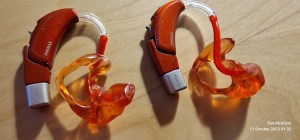
My aids are programmed to my personal audiogram to allow me to hear as normally as possible. They are also programmed with some optional settings. There is a bass boost feature that is turned on, as well as a speech-in-noise setting that allows me to filter out some background noise and hear speech in front of me. This is most effective when I am actually looking at the person speaking to me. There is also the good old T-coil setting programmed in, which allows the aids to connect to a loop system where available.
Sensorineural deafness is a type of hearing loss that affects the inner ear or the nerve pathways that carry sound signals to the brain. It can have various causes, such as ageing, noise exposure, genetic factors, infections, ototoxic drugs, or other conditions. Sensorineural deafness can affect your quality of life and well-being, but there are ways to cope with it and improve your hearing experience. These include hearing aids, cochlear implants, assistive listening devices, communication strategies, support services, and support groups.
What is Coeliac disease and how does it affect people?
Coeliac disease is a serious condition that affects the digestive system. It is caused by an abnormal immune response to gluten, a protein found in wheat, barley, rye, and some oats. When people with coeliac disease eat gluten, their immune system attacks the lining of their small intestine, causing inflammation and damage. This prevents them from absorbing nutrients properly and can lead to various health problems.
Coeliac disease is not a food allergy or intolerance. It is a lifelong autoimmune disorder that requires strict adherence to a gluten-free diet. There is no cure for coeliac disease, but following a gluten-free diet can help manage the symptoms and prevent complications.
Symptoms of coeliac disease
Coeliac disease can affect people of any age, gender, or ethnicity. However, it is more common in people who have a family history of the condition or other autoimmune diseases. The symptoms of coeliac disease vary from person to person and can range from mild to severe. Some people may not have any symptoms at all, while others may experience:
- Digestive problems, such as diarrhoea, constipation, bloating, gas, stomach pain, nausea, vomiting, and indigestion
- Fatigue, weakness, and anaemia (low red blood cell count)
- Weight loss or poor weight gain
- Growth problems and delayed puberty in children
- Skin rashes, such as dermatitis herpetiformis (itchy blisters on the elbows, knees, buttocks, and face)
- Mouth ulcers and dental enamel defects
- Bone and joint pain and osteoporosis (weak bones)
- Neurological problems, such as headaches, numbness, tingling, seizures, and ataxia (loss of balance and coordination)
- Reproductive problems, such as infertility, miscarriage, and low birth weight
- Mood changes, such as depression, anxiety, and irritability
Diagnosis of coeliac disease
If you suspect that you or your child may have coeliac disease, you should consult your GP as soon as possible. Do not start a gluten-free diet before getting tested, as this can affect the accuracy of the diagnosis. Your GP will ask you about your symptoms, medical history, and family history. They will also perform a blood test to check for antibodies that are produced by your immune system when you eat gluten. If the blood test is positive or inconclusive, you will be referred to a gastroenterologist (a specialist in digestive disorders) for further tests. The gastroenterologist will perform an endoscopy (a procedure that involves inserting a thin tube with a camera into your mouth and down your throat) to take a biopsy (a small sample of tissue) from your small intestine. The biopsy will be examined under a microscope to look for signs of damage caused by coeliac disease.
In my case, I had a gastroscopy and a colonoscopy on the same day, which took about an hour altogether. The reason for the colonoscopy was that, given the symptoms I had presented with to my GP she was concerned that I might have some form of bowel cancer. Thankfully that turned out not to be the case.

Treatment of coeliac disease
The only treatment for coeliac disease is a strict gluten-free diet for life. This means avoiding all foods that contain wheat, barley, rye, and sometimes oats. You will also need to check the labels of processed foods for hidden sources of gluten, such as malt extract, modified starch, soy sauce, and some flavourings and thickeners. You may also need to avoid cross-contamination from utensils, cookware, or surfaces that have been in contact with gluten.
Eating gluten-free can help heal the damage to your small intestine and improve your symptoms. However, it can also be challenging and require careful planning and guidance. You may benefit from seeing a dietitian (a specialist in nutrition) who can help you plan a balanced and varied gluten-free diet that meets your nutritional needs. You may also need to take supplements of vitamins and minerals that you may be lacking due to malabsorption.
Living with coeliac disease
Coeliac disease is a lifelong condition that requires constant vigilance and adaptation. It can affect your physical health as well as your emotional and social well-being. You may face challenges such as coping with symptoms, adjusting to dietary changes, managing complications, finding support from others who understand your condition.
However, with proper diagnosis and treatment, you can live a healthy and fulfilling life with coeliac disease. You can find information and support from various sources such as:
- Coeliac UK: A charity that provides advice, resources, recipes, events, and campaigns for people with coeliac disease
- NHS: The national health service that provides information on coeliac disease diagnosis
- Your GP: Your primary care provider who can monitor your condition, prescribe medication if needed, refer you to specialists if needed, etc.
- Your gastroenterologist: Your specialist who can perform tests, confirm diagnosis, provide treatment options, etc.
- Your dietitian: Your specialist who can help you plan a gluten-free diet, advise you on nutrition, etc.
Coeliac disease is a serious condition that affects the digestive system. It is caused by an abnormal immune response to gluten, a protein found in wheat, barley, rye, and some oats. The only treatment for coeliac disease is a strict gluten-free diet for life. Eating gluten-free can help heal the damage to your small intestine and improve your symptoms. However, it can also be challenging and require careful planning and guidance. You can find information and support from various sources such as Coeliac UK, NHS, your GP, your gastroenterologist, and your dietitian. By following their advice, you can live a healthy and fulfilling life with coeliac disease.
What is Sleep Apnoea and how does it affect people?
Sleep apnoea is a common sleep disorder that affects millions of people worldwide, and there’s evidence to suggest many more undiagnosed people. It occurs when the muscles in the throat relax and narrow during sleep, causing interruptions in breathing. These interruptions can last from a few seconds to minutes, and can happen hundreds of times a night. People with sleep apnoea may not be aware of their breathing problems, but they often snore loudly and gasp for air. They also tend to wake up feeling tired, groggy, and irritable.
Sleep apnoea can have serious consequences for your health and well-being. It can increase your risk of developing high blood pressure, heart disease, stroke, diabetes, and depression. It can also impair your concentration, memory, and decision-making skills, making you more prone to accidents and errors at work or school. Moreover, it can affect your relationships, mood, and quality of life.
The good news is that sleep apnoea can be diagnosed and treated effectively. The first step is to consult your doctor if you have any of the following symptoms:
- Loud or frequent snoring
- Choking or gasping sounds during sleep
- Pauses in breathing while sleeping
- Excessive daytime sleepiness or fatigue
- Morning headaches or dry mouth
- Difficulty staying awake or alert during the day
- Trouble concentrating or remembering things
- Mood swings or irritability
- Loss of interest in sex
Your doctor may refer you to a sleep specialist who can perform a sleep study to confirm the diagnosis of sleep apnoea. A sleep study involves monitoring your breathing, heart rate, oxygen level, and brain activity while you sleep. You may be asked to wear a device at home or stay overnight at a sleep clinic.
Children can have sleep apnoea too. In fact, sleep apnoea is quite common in children, especially those who have enlarged tonsils or adenoids, which can block the airway during sleep. Other factors that can increase the risk of sleep apnoea in children are obesity, allergies, hay fever, and certain genetic conditions. Sleep apnoea can affect the quality of sleep and the development of children, so it is important to seek medical help if you notice any signs or symptoms of sleep apnoea in your child.
The most common treatment for sleep apnoea is continuous positive airway pressure (CPAP) therapy. This involves wearing a mask over your nose, mouth or both, that delivers pressurized air into your airway, keeping it open and preventing it from collapsing. CPAP therapy can improve your breathing, reduce your snoring, and enhance your sleep quality and daytime alertness.
Other treatments for sleep apnoea may include:
- Oral appliances: These are devices that fit inside your mouth and help to keep your lower jaw forward and your tongue from blocking your airway.
- Surgery: This may be an option for some people who have severe or persistent sleep apnoea that does not respond to other treatments. Surgery may involve removing excess tissue from the throat, nose, or mouth, or correcting structural problems that cause obstruction.
- Lifestyle changes: These can help to prevent or reduce the severity of sleep apnoea. They include losing weight if you are overweight or obese, quitting smoking if you smoke, avoiding alcohol or sedatives before bedtime, sleeping on your side instead of your back, and keeping a regular sleep schedule.
In my case I use an APAP machine (similar to a CPAP but it automatically adjusts the air pressure depending on need) as I also have central apnoeas. Central apnoeas are pauses in breathing that occur during sleep because the brain does not send the proper signals to the muscles that control breathing. They are different from obstructive apnoeas, which are caused by a blockage in the airway. Central apnoeas can have various causes, such as heart failure, stroke, brain injury, or high altitude. They can also cause symptoms such as snoring, daytime sleepiness, headaches, and mood changes. Central apnoeas can be diagnosed by a sleep study
If you think you or a family member may have sleep apnoea, do not ignore it. Seek medical help as soon as possible and follow the treatment plan recommended by your doctor. By doing so, you can improve your health, well-being, and quality of life.
How to Travel the World with a Wheelchair

Travelling the world is a dream for many people, but it can seem daunting or impossible if you use a wheelchair. However, with some planning, research and creativity, you can overcome the barriers and enjoy the wonders of different cultures, landscapes and experiences. In this blog post, I will share some tips and resources to help you plan your wheelchair accessible trip. I’m Dan McIntyre and I’ve travelled the length and breadth of Europe with my wheelchair, from a gondola in Venice to the Nurburgring in Germany and even stopped by the Police in Monaco.
Choose your destination wisely
Not all destinations are equally wheelchair friendly, so you need to do some research before you book your flight. Some factors to consider are:
- The accessibility of public transportation, such as buses, trains, taxis and subways.
- The availability of wheelchair accessible accommodation, such as hotels, hostels, apartments or homestays.
- The accessibility of attractions, such as museums, monuments, parks, beaches and historical sites.
- The accessibility of restaurants, cafes, bars and shops.
- The attitude and awareness of the local people towards disability and accessibility.
You can find useful information about the accessibility of various destinations on websites such as Wheelchair Travel, Simply Emma and World on Wheels. These are wheelchair travel blogs that provide comprehensive reviews and advice on accessible travel for both people with limited mobility and wheelchair users. You can also join online communities and forums where you can ask questions and get recommendations from other wheelchair travellers.
Plan your itinerary carefully
Once you have chosen your destination, you need to plan your itinerary carefully. You want to make sure that you have enough time and energy to enjoy your trip without exhausting yourself or encountering unexpected obstacles. Some tips to plan your itinerary are:
- Book your flights well in advance and inform the airline about your wheelchair and any special assistance you may need. You can also request a bulkhead seat or an aisle seat for more space and comfort.
- Book your accommodation in advance and confirm that it is wheelchair accessible. You can also ask for specific details such as the width of the doorways, the height of the bed, the availability of a roll-in shower or a ceiling hoist.
- Check the opening hours and accessibility of the attractions you want to visit. You can also look for discounts or free admission for disabled visitors and their companions.
- Plan your transportation options between different locations. You can use public transportation if it is accessible or book a wheelchair accessible taxi or rental car. You can also use apps such as Wheelmap or Access Earth to find accessible places nearby.
- Pack light and smart. You don’t want to carry too much luggage that can weigh you down or take up space. You also want to pack essential items such as medications, spare parts, tools, chargers, adapters and travel insurance documents.
Be flexible and adventurous
Even with careful planning, you may encounter some challenges or surprises along the way. You may find that some places are not as accessible as they claimed to be or that some services are not available or reliable. You may also face some cultural differences or language barriers that can make communication difficult. However, don’t let these things ruin your trip. Instead, be flexible and adventurous and try to find alternative solutions or opportunities. Some tips to be flexible and adventurous are:
- Be prepared for the unexpected and have a backup plan in case something goes wrong. You can also have an emergency contact number or a travel agent who can help you in case of trouble.
- Be open-minded and respectful of the local culture and customs. You may encounter some different views or attitudes towards disability and accessibility that may not match your expectations or preferences. Try to understand their perspective and educate them if necessary.
- Be friendly and sociable with the local people and other travellers. You may find some helpful allies or new friends who can assist you or enrich your experience. You may also learn some useful tips or insights from them.
- Be adventurous and try new things that are within your comfort zone and abilities. You may discover some hidden gems or amazing experiences that you would not have otherwise.
Fun facts: The Police stop in Monaco was because I was following the F1 track round at some early hour of the morning and coming off a roundabout the exit I needed was being guarded by a Policeman, so in a slight panic I went completely around the roundabout and started heading back the way I’d come, not noticing the no entry signs. I’d got about 50 yards when I realised it was a one-way street and at the same time I realised that 2 Police cars stuck their lights and sirens on and parked right up to me to ask what I was doing.
The gondola ride in Venice was very expensive but also amazing. There is a jetty with a lift that can take you and your wheelchair down into the boat, so wheelchair users don’t have to leave their chair at all.
Travelling with a wheelchair may seem challenging, but it is not impossible. With some planning, research and creativity, you can explore the world and have a memorable trip. I hope this blog post has inspired you to travel more and make new discoveries, whether that’s abroad or in your own hometown. Happy travels!
What is Multiple Sclerosis and how does it affect people?
Multiple Sclerosis (MS) is a condition that affects the brain and spinal cord, causing damage to the nerves that carry messages between them. This damage can lead to a variety of symptoms, such as problems with vision, movement, sensation, balance, thinking and emotions. MS is a lifelong condition that can sometimes cause serious disability, although it can also be mild or moderate in some cases. There is no cure for MS, but treatments can help manage the symptoms and reduce the frequency of relapses.
MS affects more than 2.8 million people worldwide and around 130,000 people in the UK. It is one of the most common causes of neurological disability in young adults. It is more common in women than men, and usually starts in the 20s, 30s or 40s. The exact cause of MS is unknown, but it is thought to involve a combination of genetic and environmental factors that trigger an abnormal immune response against the myelin sheath, the protective layer that surrounds the nerve fibres.
MS is a complex and unpredictable condition that can affect people in different ways. There are four main types of MS:
- Relapsing remitting MS (RRMS): This is the most common type of MS, affecting around 85% of people with MS. People with RRMS have episodes of new or worsening symptoms, called relapses, followed by periods of recovery, called remissions. The symptoms may disappear completely or partially after a relapse, but some may persist or get worse over time.
- Secondary progressive MS (SPMS): This type of MS usually develops after many years of RRMS. People with SPMS have a gradual worsening of symptoms over time, with or without occasional relapses. About two-thirds of people with RRMS will develop SPMS within 15 years of diagnosis.
- Primary progressive MS (PPMS): This type of MS affects about 10-15% of people with MS. People with PPMS have a steady increase in symptoms from the onset, without any relapses or remissions. PPMS tends to start later than other types of MS, usually in the 40s or 50s.
- Progressive relapsing MS (PRMS): This is a rare type of MS, affecting less than 5% of people with MS. People with PRMS have a steady progression of symptoms from the onset, as well as occasional relapses. PRMS can start at any age.
The symptoms of MS vary widely from person to person and can affect any part of the body. Some of the most common symptoms include:
- Fatigue: This is one of the most common and troublesome symptoms of MS. It is an overwhelming sense of exhaustion that can make everyday activities difficult or impossible.
- Vision problems: These can include blurred vision, double vision, loss of vision, colour blindness, eye pain or flashes of light. These are often caused by inflammation or damage to the optic nerve (optic neuritis).
- Numbness and tingling: These are abnormal sensations that can affect different parts of the body, such as the arms, legs or trunk. They are caused by damage to the sensory nerves.
- Muscle spasms, stiffness and weakness: These are problems with muscle function that can affect movement, balance and co-ordination. They are caused by damage to the motor nerves.
- Pain: This can be acute or chronic pain that can affect different parts of the body. It can be caused by nerve damage (neuropathic pain) or muscle spasms (musculoskeletal pain).
- Problems with thinking, learning and planning: These are cognitive problems that can affect memory, attention, concentration, reasoning and problem-solving. They are caused by damage to the brain tissue.
- Depression and anxiety: These are emotional problems that can affect mood, motivation and self-esteem. They can be caused by the impact of living with MS or by changes in brain chemistry.
- Sexual problems: These can include reduced libido, erectile dysfunction, vaginal dryness or difficulty reaching orgasm. They can be caused by physical or psychological factors.
- Bladder problems: These can include urinary urgency, frequency, incontinence or retention. They can be caused by damage to the nerves that control bladder function.
- Bowel problems: These can include constipation, diarrhoea or faecal incontinence. They can be caused by damage to the nerves that control bowel function.
- Speech and swallowing difficulties: These can include slurred speech, difficulty finding words or swallowing food or drink. They can be caused by damage to the nerves that control speech and swallowing.
The severity and impact of these symptoms can vary from person to person and over time. Some people may only experience mild or occasional symptoms, while others may have more severe or frequent symptoms that affect their quality of life. The symptoms can also be influenced by factors such as stress, infection, temperature, medication or menstruation.
MS can be a challenging condition to live with, but there are ways to manage the symptoms and cope with the changes. There are various treatments available for MS, such as medication, therapy, surgery or complementary therapies. These can help reduce inflammation, prevent relapses, slow down progression, relieve symptoms or improve function. There are also support services and resources available for people with MS and their families, such as MS nurses, physiotherapists, occupational therapists, counsellors, social workers or support groups. These can provide information, advice, guidance, practical help or emotional support.
MS is not a fatal condition, but it can affect life expectancy to some extent. The average life expectancy for people with MS is about 5 to 10 years lower than the general population. However, this can vary depending on the type of MS, the age of onset, the severity of symptoms and the availability of treatment. Many people with MS can live long and fulfilling lives with the right care and support.
If you want to learn more about MS, you can visit the following websites:
- MS Society: A UK charity that provides information, support and research for people affected by MS.
- MS Trust: A UK charity that provides information, education and specialist services for people living with MS.
- NHS: The UK’s national health service that provides information and advice on health conditions and treatments.
What is autism and how does it affect people?
Autism is a lifelong developmental disability that affects how people communicate and interact with the world. It is not an illness or disease, but a different way of thinking and processing information. Autism is also known as autism spectrum disorder (ASD) or autism spectrum condition (ASC), because it covers a wide range of abilities and challenges.
According to the National Autistic Society, more than one in 100 people are on the autism spectrum and there are around 700,000 autistic adults and children in the UK. However, this number may be higher as many autistic people may not have been diagnosed or identified yet.
Autism is a spectrum condition, which means that every autistic person is unique and has their own strengths and difficulties. Some autistic people may need a lot of support in their daily lives, while others may be able to live independently. Some autistic people may have learning disabilities, mental health issues or other conditions, while others may not.
There are some common characteristics that autistic people may share, such as:
- Social communication and interaction challenges: Autistic people may find it hard to understand and use verbal and non-verbal language, such as gestures, facial expressions and tone of voice. They may also struggle to make eye contact, initiate and maintain conversations, or take turns in speaking. They may prefer to communicate in different ways, such as using pictures, symbols or sign language.
- Repetitive and restrictive behaviour: Autistic people may have a strong need for routine and predictability, and may get upset by changes or unexpected events. They may also engage in repetitive actions or movements, such as rocking, spinning or flapping their hands. They may have highly focused interests or hobbies that they are passionate about and want to share with others.
- Sensory differences: Autistic people may experience sensory input differently from other people. They may be over- or under-sensitive to sounds, lights, smells, tastes or touch. This can affect how they cope with everyday situations, such as crowded places, bright lights or loud noises. They may seek out or avoid certain sensory stimuli to regulate their emotions or cope with stress.
Autism is not something that can be cured or changed. It is a part of who a person is and how they see the world. However, with the right support and understanding, autistic people can live fulfilling and meaningful lives.
If you think you or someone you know could be autistic, you can find out more about getting a diagnosis and where to get support from the National Autistic Society website.
Take Control of Your Career By Building a Business From Home


This is a guest post by Elijah Dawson of Look for Jobs Here
Are you looking to take control of your career? Starting and running your own business allows you to be your own boss, work on your own terms, and live the life you want. With the right plan and some hard work, you can build a successful business from the comfort of your own home.
Have a Well-Appointed Office Space
When working from home, it’s important to have a designated office space in order to stay productive. This will help reduce distractions and allow you to focus on building your business without worrying about other household chores or tasks. You should also make sure that this space is comfortable and inviting, as this will make it easier for you to spend time in it. Also see that you make the space accessible and client-appropriate.
Setting up a home office can also add to your home’s value. Such improvements and updates often result in a boost in one’s property appraisal value, which is a great help should you decide to sell your home soon. Be sure to save all the receipts as you create the office space so you can justify the update in the future.
Write a Business Plan
Creating a detailed business plan is crucial for starting any successful business. It should outline start-up costs, target customers, market research, and marketing strategies. Harvard Business Review points out that a well-thought-out plan makes it easier for potential investors or lenders to understand the project and to decide if they want to invest or provide funding.
Hire Remote Workers
Hiring remote workers can be a viable solution for businesses looking to grow quickly and save on overhead costs. Remote workers offer flexibility in terms of work location and required resources, resulting in lower expenses over time. Additionally, remote work allows access to a wider pool of talent, including specialised skillsets unavailable locally.
Develop a Marketing Plan
A marketing plan is crucial for the success of any new product or service launch. It outlines how you will reach potential customers and convince them to choose your offer over others in the market. This plan includes creating an online presence, building relationships with influencers, advertising through multiple channels, and utilising referral programs to maximise customer reach and build brand trust.
Take Advantage of YouTube
Utilising Youtube‘s global user base of millions provides an incredible opportunity for effective advertising. By incorporating banners and ads within related videos, businesses can greatly amplify their reach and attract customers. And with Youtube‘s free and user-friendly platform, it’s easy to get started.
Take Breaks
The Wellbeing Thesis notes that taking regular breaks throughout the day is crucial to maintain productivity levels and avoiding burnout caused by overworking oneself. Engaging in activities like taking walks outside, reading books, or listening to music can help rejuvenate the mind and body from prolonged hours spent staring at screens. Even short breaks away from the workspace can have a significant impact on an individual’s productivity and overall well-being.
Get an Online Business Degree
Going back to school to sharpen their current skill sets can benefit individuals who aim to become better entrepreneurs and leaders. Either by enrolling in a full-time study program or online classes, individuals can improve themselves professionally and gain a university degree which can increase their employment opportunities. This approach can also provide huge time savings and demonstrate the applicant’s commitment to personal and professional growth, which is highly valued by potential employers.
Building a successful business requires hard work and dedication, but the effort is worth it. One should consider having a designated office space. Utilising sites like YouTube and sharpening your skillset by going back to school to earn an online degree are all effective tips that can help you take your first steps toward owning your own business and tackle future obstacles head-on.
Image via Pexels
 Journeys In Words And On Wheels
You must be logged in to post a comment.