Riding the Waves of Motivation: Staying Afloat on Off Days

The Highs of Motivation

We’ve all felt it — that surge of energy when motivation courses through our veins. It’s the fuel that powers us to tackle our goals, the wind in our sails pushing us towards success. On these days, we’re unstoppable, checking off tasks with a vigour that seems to come from a boundless well.

The Lows of Demotivation

But then, there are the other days. The odd ones where that well of motivation seems to have dried up overnight. We wake up feeling like we’re wading through treacle, every task an insurmountable mountain. It’s normal, yet it can make us feel isolated, as if we’re the only ones struggling while the rest of the world charges ahead.

Understanding the Cycle

It’s crucial to recognise that motivation isn’t constant; it’s a cycle. Like the ocean’s tides, it ebbs and flows. Accepting this can be liberating. It means that feeling down or unmotivated isn’t a failure — it’s part of the human experience.

Strategies for the Low Days

So, what can we do when motivation is scarce? Here are a few strategies:

  • Start small: Tackle the smallest task on your list. Completing it can give you a sense of achievement and might just kickstart your engine.
  • Seek inspiration: Sometimes, we need external sources to light our internal fire. Read a book, listen to a podcast, or watch a TED talk — anything that resonates with you.
  • Connect with others: Reach out to a friend or colleague. Often, just talking about our lack of motivation can help dissipate it.
  • Be kind to yourself: Remember, it’s okay to have off days. Be as compassionate to yourself as you would be to a friend in the same boat.

Embracing the Journey

Motivation is not just about the highs; it’s about learning to navigate the lows. It’s about understanding that our worth isn’t tied to our productivity on any given day. So, on those odd days when you’re feeling down, remember that the tide will turn. The key is to ride the wave, not fight against it.

Interoception: The Inner Sense That Shapes our Experience

Introduction

Along with alexithymia, my autism diagnosis also made me aware of my lack of interoception. This has been a lifelong issue for me.

What is Interoception?

Interoception is our ability to perceive and interpret signals coming from within our own bodies. It’s an internal sense that informs us about the physiological state of our body, such as hunger, thirst, temperature, and internal pain. This sense can be both conscious and subconscious, and it plays a crucial role in maintaining homeostasis and facilitating self-awareness.

The Causes of Interoceptive Dysregulation

Interoceptive dysregulation can arise from a variety of sources. It’s often associated with mental health conditions like anxiety, depression, panic disorder, anorexia nervosa, bulimia nervosa, PTSD, OCD, ADHD, alexithymia, somatic symptom disorder, and illness anxiety disorder. Misrepresentations of internal states or a disconnect between the body’s signals and the brain’s interpretation of those signals are suggested to underlie these conditions.

Treatments and Techniques for Managing Interoception

Several approaches exist to enhance interoceptive awareness and regulation:

Mindfulness and meditation: These practices can enhance one’s awareness of bodily sensations and help regulate emotional responses.

Talking therapies: Cognitive-behavioural therapy (CBT) and other psychotherapies can assist individuals in better understanding and responding to their interoceptive signals.

Interoceptive training: Specific exercises that focus on recognising and responding to internal bodily sensations can be beneficial.

Aligning dimensions of interoceptive experience (Adie): A novel therapy that involves interoceptive heartbeat training to align interoceptive experience.

Conclusion

Interoception is a vital but often overlooked aspect of our sensory experience. By understanding and managing our interoceptive signals, we can improve our emotional regulation and overall mental well-being.

Understanding Alexithymia: The Challenge of Emotional Blindness

Introduction

In my autism diagnosis journey, and after several sessions meeting other autistic people through the National Autistic Society for Scotland in their Embrace Autism group sessions, I have come to realise that I can’t, and have never been able, to pinpoint what I’m feeling (emotionally) at any given time. This is a condition linked to autism that is named Alexithymia.

What is Alexithymia?

Alexithymia, often described as “emotional blindness,” is a condition characterised by difficulty in identifying, expressing, and describing emotions. It’s not just about being less emotional; it’s about having a hard time understanding what you’re feeling at any given moment. People with alexithymia might find themselves confused when asked how they feel, or they may struggle to recognise the emotions of others.

The Roots of Alexithymia

Although not fully understood, the causes of alexithymia could be influenced by genetics, brain structure, and early life experiences. Some studies suggest it could be related to damage in the insula, a part of the brain involved in empathy and emotional awareness. It’s also associated with various mental health conditions, including depression, anxiety, and autism spectrum disorders.

Living with Alexithymia

For those with alexithymia, everyday interactions can be challenging. They might appear distant or uninterested because they don’t express emotions in a typical way. This can lead to misunderstandings in personal relationships and difficulties in social situations.

While there’s no specific treatment for alexithymia, therapy can help improve emotional awareness and expression. Techniques like cognitive-behavioural therapy (CBT) and mindfulness practices can assist individuals in better understanding their own emotions and the emotions of others.

Conclusion

Alexithymia is a complex condition that affects how people perceive and express emotions. By recognising its presence and understanding its implications, we can create more supportive environments for those who experience the world differently.

Benefit Sanctions Cause Poverty And Destitution

I’ve been writing about benefit sanctions for years but I thought that I’d write a timely reminder of the harmful affects that imposed sanctions cause. Here’s a list including and not excluding others: Harm to mental health Harm to relationshipsIncreased debt and reliance on credit cards and loansFood poverty and fuel povertySurvival crimeIncreased risk of […]

Benefit Sanctions Cause Poverty And Destitution

DWP Work Coach Shortage

Take Control of Your Career By Building a Business From Home

This is a guest post by Elijah Dawson of Look for Jobs Here

Are you looking to take control of your career? Starting and running your own business allows you to be your own boss, work on your own terms, and live the life you want. With the right plan and some hard work, you can build a successful business from the comfort of your own home.

Have a Well-Appointed Office Space

When working from home, it’s important to have a designated office space in order to stay productive. This will help reduce distractions and allow you to focus on building your business without worrying about other household chores or tasks. You should also make sure that this space is comfortable and inviting, as this will make it easier for you to spend time in it. Also see that you make the space accessible and client-appropriate.

Setting up a home office can also add to your home’s value. Such improvements and updates often result in a boost in one’s property appraisal value, which is a great help should you decide to sell your home soon. Be sure to save all the receipts as you create the office space so you can justify the update in the future.

Write a Business Plan

Creating a detailed business plan is crucial for starting any successful business. It should outline start-up costs, target customers, market research, and marketing strategies. Harvard Business Review points out that a well-thought-out plan makes it easier for potential investors or lenders to understand the project and to decide if they want to invest or provide funding.

Hire Remote Workers

Hiring remote workers can be a viable solution for businesses looking to grow quickly and save on overhead costs. Remote workers offer flexibility in terms of work location and required resources, resulting in lower expenses over time. Additionally, remote work allows access to a wider pool of talent, including specialised skillsets unavailable locally.

Develop a Marketing Plan

A marketing plan is crucial for the success of any new product or service launch. It outlines how you will reach potential customers and convince them to choose your offer over others in the market. This plan includes creating an online presence, building relationships with influencers, advertising through multiple channels, and utilising referral programs to maximise customer reach and build brand trust.

Take Advantage of YouTube

Utilising Youtube‘s global user base of millions provides an incredible opportunity for effective advertising. By incorporating banners and ads within related videos, businesses can greatly amplify their reach and attract customers. And with Youtube‘s free and user-friendly platform, it’s easy to get started.

Take Breaks

The Wellbeing Thesis notes that taking regular breaks throughout the day is crucial to maintain productivity levels and avoiding burnout caused by overworking oneself. Engaging in activities like taking walks outside, reading books, or listening to music can help rejuvenate the mind and body from prolonged hours spent staring at screens. Even short breaks away from the workspace can have a significant impact on an individual’s productivity and overall well-being.

Get an Online Business Degree 

Going back to school to sharpen their current skill sets can benefit individuals who aim to become better entrepreneurs and leaders. Either by enrolling in a full-time study program or online classes, individuals can improve themselves professionally and gain a university degree which can increase their employment opportunities. This approach can also provide huge time savings and demonstrate the applicant’s commitment to personal and professional growth, which is highly valued by potential employers.

Building a successful business requires hard work and dedication, but the effort is worth it. One should consider having a designated office space. Utilising sites like YouTube and sharpening your skillset by going back to school to earn an online degree are all effective tips that can help you take your first steps toward owning your own business and tackle future obstacles head-on.

Image via Pexels

We Are IT…

We are IT.  We are Support.  We are the NHS.

This is the slogan currently being used in an advertisement promoting IT related jobs in the NHS.  The advertisement itself is bold and dynamic, showing how IT systems form the backbone of the NHS and help to change, improve and even save lives.

But there is a lot more to the NHS than IT systems, software and hardware; there are the components sometimes known as wetware or meatware – the people who use these systems to assist in looking after patients.

These people are nurses, doctors and consultants.  They are surgeons, health care assistants and domestic staff.

These people are dedicated to providing first class patient care.  They are highly skilled, well trained, professional and human.

Whilst these people are all experts in their own field, and confident in what they do day in and day out, they are not always experts in IT and a lot of them aren’t confident when systems do something unexpected, as can happen.

That’s when they call us in IT support and say things like “Oh I’m stupid when it comes to computers” or “You must get fed up of me calling” and all sorts of similar phrases.  We also get lots of people apologising for having forgotten their passwords.

With these people I like to turn the statement around and show them that they are not stupid/thick/clueless/whatever.  I take their job role and ask them if they would expect me to be able to do it.

For a nurse I might respond with “OK, so you take blood samples, if you asked me to do that I’d feel stupid and wouldn’t know where to begin”

For a consultant I might explain to them that if they asked me to diagnose an illness in a patient using the patient’s notes and scan results then again I wouldn’t have a clue what I was doing.

The point is these people, claiming to be stupid etc actually aren’t at all; they just have different skills and knowledge and that is important, as without this the hospital simply wouldn’t be able to function.

We need people who have knowledge in IT.  We also need people with knowledge of the myriad of diseases and impairments that the human body can suffer.  We need people who know what is needed to keep the place clean and hygienic and we need people who can operate the complex clinical machinery that detects and scans and probes, seeking out causes.

That slogan up above?  I think it would be more accurate if it read “We are IT.  We are support.  We are one part of the NHS machine.”


Continuing Learning


I had a productive day yesterday.  In the morning I was visited by a doctor from Atos who was assessing me for my PIP claim.  I’ve been on indefinite DLA since 2005 and had the dreaded brown envelope telling me that was ending back in July and that I had to claim PIP from then on.

These assessments are generally negative and stressful, not only because the staff are either from Atos or Capita, who both have bad track records, but also because they focus on what you can’t do rather than what you can.

However, the lady who visited was lovely – warm and friendly and put me at ease within minutes.  The assessment went well I think, though I won’t know until I get the decision.

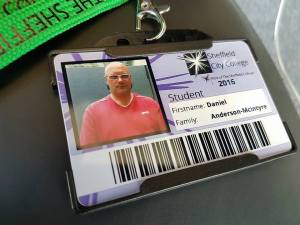
In the afternoon I visited Sheffield College.  Back in February I gained my level 1 certificate in BSL with Sense in Rotherham, but they don’t offer level 2.  I signed up at Sheffield and am looking forward to continuing to learn this fascinating language.  Like my first BSL tutor, the chap running this course is deaf and there will be no spoken language in class so this should be interesting.

14232400_10153617416572723_434507829291289761_n

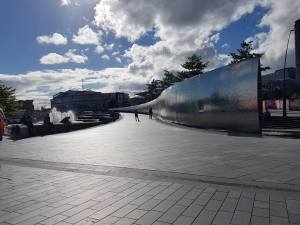
The train journey to Sheffield was straightforward and on arrival I snapped this picture on my phone:

14317353_10153618971277723_5225142056821181205_n

Which got a great response on Facebook.  I was surprised as it was just a snap and I couldn’t actually see properly when I took it as the sun was in my eyes.

The train journey back after registering at the college was eventful – I had to get off the train at Meadowhall, just one stop before Rotherham, because there was a train stuck at Rotherham with a passenger waiting for an ambulance.  This wasn’t a big issue as the next train to Rotherham arrived just a few minutes later so I was back on track.

It was nice to have had a day off work and to have managed to get stuff done without too many issues.

Review of 2012 and Looking Forward to 2013

January 1st saw the introduction of the new, secure, Blue badge.  On the 5th I appeared on BBC Look North (on behalf of Disabled Motoring UK) talking with Peter Levy about the changes and about enforcement of the scheme.  This involved getting to the studio in Leeds (somewhere I was already familiar with after my appearance on Radio Leeds in 2011).  I was mic’d up in the newsroom and positioned in front of a rack on wheels containing some equipment that looked like mixers, 2 small screens (one showing me and the other showing Peter in another studio) and on top of it all a camera and bright light, which managed to make the most of my shiny forehead!  The technician who had mic’d me up and made me comfortable appears in the clip as a hand in the background pretending to work.

January 8th saw the birth of my youngest Niece Phoebe, who I had in my arms within 30 minutes of her being born.  My memory is not great but I vividly remember that at home we had just sat down to a Sunday tea of chicken, rice and potato wedges when I got a call informing me that there had been complications during her birth and asking if I could get to the hospital.  When I arrived it turned out that Sarah, Phoebe’s Mum, was not well, though I never did find out the details of the problem.

Kirklees-20120108-01284

In other news January saw me meeting Pan Aveyard, bag packing on my Birthday, the news that Mat Fleming was being put in for GCSE Maths 2 years early, Von’s car throwing a wobbly, Joe Fleming ending up in hospital with suspected broken ribs and my friend Liz Ellis speaking on BBC Radio Leeds.  I was also disappointed at not having been selected to be a torchbearer after being nominated and getting through the second round of selection, but found out that a distant cousin of mine (also a wheelchair user) was carrying the torch through Dewsbury which was cool.

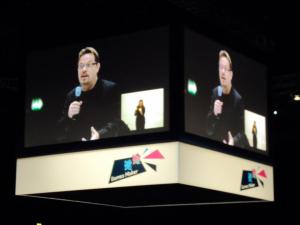
February saw me at my first training session for the Olympics.  An orientation session hosted by Lord Coe and Eddie Izzard which was informative and entertaining.  This proved to be a challenge to get to as it was held at Wembley Arena and coincided with some of the worst snow seen in London, making a simple 10 mile journey take around 4 hours.  I was one of the lucky ones who managed to keep my car moving – I encountered rather a lot of BMW’s and Mercedes’ sliding and slithering around and unable to get up the hills, forcing everyone that could keep moving to have to weave among them.

421299_10150502318037723_835652481_n

One of the more positive aspects of that session was that it gave an idea of just exactly how many of us were involved, a chance to speak to some of them and provided a spark of excitement in anticipation of the Olympics.
425271_10150502316997723_194190942_n

February was the month of Grimsby YMCA’s annual Sleep Easy campaign and fundraising project.  I spent a night in Grimsby sleeping on the street with just some cardboard and lots of layers of clothing for comfort.  This was just one night and was incredibly difficult, I think at most I only actually slept for around 15 minutes and it was certainly an eye opener.

399775_10150497123892723_800626432_n

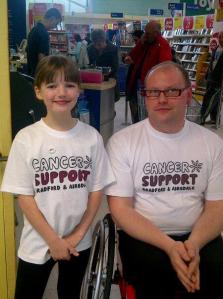
February also saw me start doing admin support in the fundraising office at Cancer Support Bradford and Airedale for 2 days/week.  This had come out of a conversation with my friend Sarah Firth who works there and (hopefully!) allowed the fundraisers and Sarah to be able to spend more time doing what they’re best at and less time doing admin tasks.  This also got me out of the house and interacting with people as well as improving my confidence at the realisation that I could still cope (after some 2/3 years away) with working in an office and be able to problem solve and from time to time even answer IT related questions.  This lasted right up to going away for the Olympics in June and the intention was to return to this after the Olympics, but life took a bit of a twist.

In other news for February, I took Libby to the library for the first time, something she loved and has enjoyed ever since, I attended my first (and last!) ever football match, watching Huddersfield Town get beaten by Sheffield Something on Valentines Day and I met and became friends with my “Brother from another Mother” Mark Winterbourne.

IMG01446-20110326-0914

March came and brought with it fuel shortages and another bag pack for Cancer Support Bradford and Airedale.  At this session I was stationed by an exit of the supermarket with Amber, my friend Sarah Firth’s Daughter and we got talking about MS, what it is and how it happens etc and about the neurological system in general.  Something which Amber took in and later educated her Mum on.  That was deeply impressive to me and was an illustration of how much you can influence a child just by talking to them.
557226_3522879113276_1680242923_n

March was also the month Von passed her 3rd theory driving test which brought her another step closer to getting her license after so many years of being knocked back.

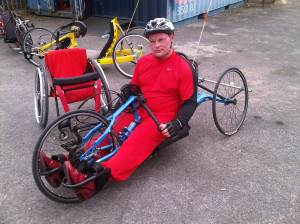
For me March also saw me at Stoke Mandeville stadium spending the weekend handcycling on track and out on the road with the guys and girls from the UK Handcycling Association.  This was a lot of fun but also a lot of hard work.
Aylesbury Vale-20120331-02024

In other news for March I managed to spill coffee on my beloved Kindle DX but also managed to strip it down and clean it all out and it survives to this day.  And I learned an important lesson when I failed to display my Blue badge whilst parked in Huddersfield and had to ask Kirklees Council to withdraw a parking ticket, something they agreed to do but weren’t obliged to do.

April was Gadget Show Live in Birmingham with Mat Fleming, this was pretty amazing and gave me a chance to drool over lots of lovely gadgets and then watch a live show featuring some amazing acts like Laserman and Addictive TV.

This was also the month I decided to trial Windows 8 on my laptop and then, shortly after installing it, wondered what I’d done.  I soon got used to it though and quickly grew to like it, despite the oft-complained about “split personality”.

April also saw the inaugural #CostaPosse meet up.  I have some amazing friends – Liz Ellis, Mark and Elaine Winterbourne and Sarah Firth and we decided to get together at Costa Coffee in Greengates, Bradford.  The main link between us all is Cancer but when we’re together we laugh and laugh and laugh.  More details of the #CostaPosse are in my post titled “Special Friends”.

This was a busy month for Libby too when she started Karate, graded to White belt and took part in her first tournament.

In other news I got my shifts for the Olympics and got a scare when Libby collapsed on the kitchen floor in front of me, which saw me panicking and frantically trying to get hold of Von and then calling an Ambulance.

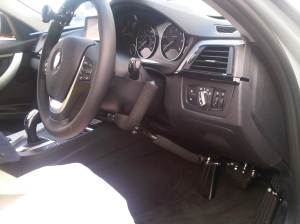
May saw another training session for the Olympics which introduced me to my car, a BMW 320d ED, and also to radio communications and the associated protocols as well as a bit of customer service and road safety.  After these I was then allowed to get behind the wheel and after a bit of familiarisation with the car and navigation system headed out onto the streets of London for assessment with a driving examiner.  Thankfully I passed with full marks for safety and a few pointers such as checking the inside mirror when turning left for cyclists.

OLYMPUS DIGITAL CAMERATower Hamlets-20120513-02105

May also saw me say goodbye to my beloved BlackBerry when I upgraded to my HTC One X Android phone, which was a massive leap over the BlackBerry in terms of functionality and ease of use.  This was very kindly set up for me by the ever-knowledgeable Pan Aveyard at his free social media and Android drop-in.

In June Joe Fleming managed to get a job with his first interview after leaving school.  He had printed off several copies of his CV and handed them out at various shops in Dewsbury and got an interview, turned up dressed smartly and got the job.

I battled my fear of heights when I got harnessed up and hooked to a wire to zip slide from the Tyne Bridge in Newcastle.  This was 750 feet from the bridge crossing the river to land on the bank at the other side and was done the day after Bear Grylls had taken the Olympic flame down the same line.  This was in aid of Cancer Support Bradford and Airedale and required my good friend Sarah Firth to firmly tell me I was doing it and had no choice after I got on the parapet of the bridge and then announced I couldn’t do it.  I did do it, am glad I did and will be doing it again.

457398_10151022071675831_1005852006_o469858_10151022073765831_1949737402_o

June also brought another Olympic training session.  This time it was venue-specific and so I took me to the ExCel centre in London which was to be my base depot for sessions covering depot procedures, vehicle checks, checking in and out of car keys, radios and paperwork and health and safety around the depot.  There was also information around security and access to the depot and I was given a VAP to allow my own car to access the depot and was allocated a parking space.  For the rest of the day we hit the road to familiarise ourselves with the routes we would be using.  I had passengers in my car from the Metro newspaper who were writing a feature about the Transport team and in particular about the 2 disabled drivers based at our depot, being me and Graham Day.

2012-06-22 13.09.172012-06-22 10.38.28

In other news Libby graded to Yellow belt in Karate and I collected my Olympic uniform.

July was a busy month, beginning with Von managing to fall while ice skating and doing herself some serious damage.  It initially looked as though she might have a spinal injury but a few hours later it turned out she’d broken her scaphoid, a small bone near the thumb.

IMAG0868

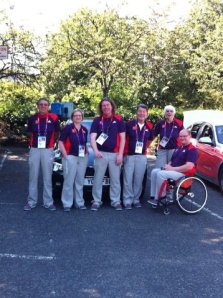
The biggest news from July was Von passing her practical driving test, finally!  I was sat by Gatwick airport in London in my Olympic BMW when the message came through and I reckon the scream would probably have been heard in Yorkshire.
557496_10150918227957723_2026732328_n 622816_10150918233307723_1085448388_o

And in July I started my Olympic driving duties.  My first shift, driving that car out of the depot and onto the streets “properly” made me feel proud, though nervous at what to expect.  Those nerves soon turned to boredom though when it transpired that demand for the service had been over-anticipated.  During one shift a bunch of us were sent up from the depot in the basement of ExCel into the main area and allowed to watch some of the sport.  I ended up watching some fencing which was fun.

527073_10150918217267723_1655288948_n616333_10150930182732723_230368253_o412410_10150930352972723_1419403882_o616555_10150930289622723_610583823_o

After my first shift I headed from London straight to Birmingham where Jodi Picoult and her Daughter Samantha van Leer were doing a talk and book signing of their first co-authored book Between the Lines.  This was the second time I’d met Jodi and being in a lecture theatre the stage was down some steep stairs.  Jodi and Samantha came up to meet me and sign books and Jodi made a nice comment about my Olympic uniform.

396662_10150892417532723_375751752_n 561412_10150892415162723_636941932_n

In July Cancer Support Bradford and Airedale held their annual Moonlight Walk event for ladies.  I volunteered to help and acted as “emergency” driver carrying first aider Aimee Vonstra-Edwards.  During this and whilst following the ladies one of them became exhausted and became a passenger.  I was trying to shout encouragement to the rest still taking part.  It was a very successful and enjoyable event and there was a great atmosphere.

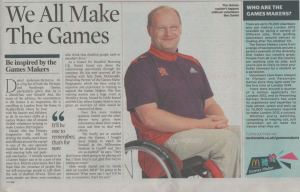
Back to the Olympics, The Times newspaper did a feature on 3 of the Games Makers and I was one of them.  This involved an interview with one of their writers and a photoshoot session at Tower Bridge Studio, the first time I’ve had a professional photoshoot and the first time I’ve worn make up!  I was very impressed at the way the photos turned out though.

524019_10150934076562723_56367937_n 527476_10150934077572723_764190369_n524372_10150935551687723_1479659189_n

In other news Libby made us proud with her SAT results and her acting as Nancy in the school production of Oliver and I confronted a man acting bizarrely on our street, parking his car and watching kids playing then driving round the corner, parking again, putting on a hat to cover his face and walking round the street.  That was also reported to the Police and thankfully he hasn’t appeared again.

August saw me in hospital after going to A&E in lots of pain and being admitted.  Not a great time but made better by visits from family and a surprise visit from the the #CostaPosse Sarah, Mark and Liz, who I understand had some fun of their own trying to find the ward and confusing the nurses.  High point of that stay and what made me laugh through the pain was being told by one of the nurses that I was “well equipped”.

September came and with it a new job, working as an IT contractor at Rotherham Hospital, I just can’t stay away from the places lol.  It was quite possibly very well timed though as I wasn’t in a good place mentally at the time

September also brought 2 thank you letters just days apart.  1 from Cancer Support Bradford and Airedale thanking me for my efforts over the few months I was there and 1 from David Cameron that was a thank you to all the Games Makers for their efforts during the Olympics.

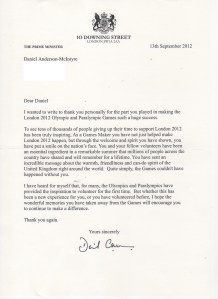
CSBA Thank You Letter Edited PM Thank You Letter

And being September it was time for the DMUK Awards.  This was a fab and successful event with examples of great things being done by and for disabled people and showcased some wonderful achievements.  I was particularly pleased to be reunited with an old friend – a certain 1932 Argson mobility trike which has been restored by Twisted Mind Custom Motorcycles and also to meet and talk with Sue Marsh who, along with Kaliya Franklin, received the Denny Denly award in recognition of their work on producing the Spartacus report which forced the Government to rethink some of their welfare reforms.  Sue is a lovely lady who was so modest and it was great to meet her.

DSC05494528734_10151022830517723_1340645517_n424677_10151022818082723_1568533055_n

In other news, Libby successfully got through another Karate tournament and I was named as the first “champion” of the Great Yorkshire Stair Climb.

October was all about In the Pink.  My awesome friend Sarah who works at Cancer Support Bradford and Airedale had set herself a challenge to wear something Pink every day of October and to have at least 10 photos taken out in public places.  Now at first this might sound easy but when she mentioned about how it made her feel, really self-conscious and nervous, it becomes clear that it wasn’t quite that easy.  Sarah got donations of all sorts of items of clothing in Pink including wigs and even had a Pink car to use for the month.  Could she be any more conspicuous!  Sarah did an amazing job and pulled it off magnificently.

396212_271170276319666_1893455556_n

October also saw my first visit to Top Gear Live, which I loved and the full release of Windows 8 which, after having trialled it, I upgraded to whilst away in a hotel.

In November my friend Pan Aveyard finally managed to jump out of a plane.  This was supposed to have happened in July but the skydive people had to rearrange due to the weather, then it was supposed to be September but I had a job to go to so had to rearrange.  So it finally happened, on a cold but dry and clear day this brave (mad) man went up in a plane, which is bad enough, and then jumped out of it.  Thankfully he made it back to earth safely and in so doing raised lots of cash for Cancer Support Bradford and Airedale.  Respect.

416970_10151066955632723_1128271097_n 409093_10151066958397723_1831098991_n

November held a challenge for me as well in the form of the Great Yorkshire Stairclimb.  This event involved climbing up the stairs inside Yorkshire’s tallest building, Bridgewater Place in Leeds.  There are 522 stairs and I believe I may be the only wheelchair user in the world to have completed such a challenge and am possibly the only wheelchair user ever to have been on the roof of this building.
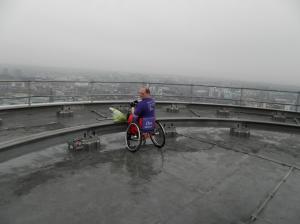
616357_10151092225007723_2096577926_o 703955_10151092216547723_1730667315_o 598442_10151306066066422_1913625387_n

In a moment of fun November brought me my first ever taste of race car driving on a track.  Organised by ST Accessible Motorsport and using their race prepared Volvo S60 with 240bhp and which can be quickly adapted to be driven by people with a wide range of disabilities.  This was a huge amount of fun and after telling Von about it it sounds like she’ll be up for a go at a future session.

OLYMPUS DIGITAL CAMERA 616135_553161821377542_54188345_o 665871_553161718044219_1226657492_o

November also saw me arranging my big challenge for 2013.  I signed up to take part in the Edinburgh 5K wheelchair race and the day after the Edinburgh marathon.  Then was told by the organisers that I wasn’t allowed to take part in the marathon as they don’t allow wheelchairs in.  There then followed almost a month of discussion while they tried to find a valid excuse for not allowing me to take part.  The details of that are in my post titled “The Challenge is to be Accepted for the Challenge”.

December started with Gadget Show Live @ Christmas at the ExCel centre and it sure was strange seeing it in civilian guise after having been based there during the Olympics.  The exhibition wasn’t as good as at Birmingham and was a lot smaller but the show was fab.

And December entailed getting ready for Christmas.  Decorating the house, wrapping gifts and writing cards.  Catching up with friends and family.

I was also asked by Dilwyn Price to be best man at his wedding to my Mum in May next year which was a shock but in a nice way.

We spent Christmas Day at my Mum’s in Wales which was nice and relaxing and made it more enjoyable than usual.

Looking forward to 2013….

2013 already has a challenge arranged in the form of the Edinburgh wheelchair race and marathon and I will be starting training for that shortly and starting on a diet too.  May is going to be a busy month with my Mum’s wedding on the 4th in Wales, the DMUK AGM in Glasgow on the 18th and the Edinburgh events on the 25th and 26th.
Turning the Tables – Employing Disabled People

This post on the Same Difference blog prompted some thoughts on the subject of employing disabled people.  It can be nerve wracking for anyone going through the whole job hunting process – updating your CV, applying for a job, writing the perfect cover letter and then, if you’re lucky, going to an interview.

For a person with a disability this can be even more worrying.  Not only are you in competition with the other applicants, you must also get past any prejudices and worries and pre-conceived ideas that the potential employer may have.  The employer may believe for example that a disabled person is likely to take lots of time off because of illness or for medical appointments.  If the role applied for is customer facing the employer may worry about what customers will think.

There are many other ideas that may, in the employers mind, put up barriers to employing the disabled person.  It may seem to be the easier option to employ an able-bodied person instead, even if their skills or experience are less than the disabled person.

Preparing for the interview is key to dealing with this.  Of course, it is always important to prepare for an interview.  Research the company or organisation, find out all you can about them, be prepared to answer questions about them – the employer will be looking for someone who has taken an interest.  In addition have some questions ready to fire back.  Has the company recently won a large contract or opened new premises?  Are they doing something new or interesting?  Mention it and probe into the details.  Not only does this show you have done some research and are interested but it also turns the interview into a 2-way conversation rather than a question and answer session.

That is standard interview preparation advice.  For the disabled person you could also prepare some information about your disability.  You don’t need to give your entire medical history but letting the employer know what effects your disability has on your day-to-day life and what adjustments might be needed in order for you to be effective in the role can be useful and gives you the chance to present your disability in a positive way and counter any doubts that the employer might have.

Let’s take a look at one of the most common worries employers have about taking on disabled staff, and some of the positive arguments:

“Disabled people need lots of time off, this costs money”

Sure, disabled people may need time off from time to time.  Sometimes we have  appointments for assessments, treatments and regular check ups.  But this also applies to able-bodied people.
Some people see disabled people as being ill simply because they have a disability.  This is quite common but untrue.  We do get ill, but we are not ill constantly.
Disabled people are more likely to come to work even if they are ill.  There can be a feeling that we have to work harder and better than our able-bodied colleagues in order to prove ourselves.
Following on from the above, disabled people are less likely to take time off for common problems that see able-bodied people staying at home.  Because we’re often used to pain, side effects of medications and struggling with every day tasks we are able to cope with back pain, headaches, feelings of nausea etc.

See how the negative can be turned around?  If nothing else, see the interview as a chance to educate and maybe, just maybe, change someone’s view.